

When a tree log enters the saw mill, the operator or sometimes the tree owner has to decide how the log will be cut. Several different methods exist, with varying degrees of complexity and yielding different plank qualities.
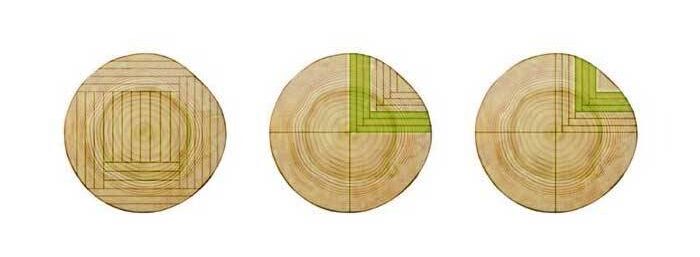
Some cutting techniques require advanced equipment and are more resource intensive than others. Some techniques create sought-after results but at the expense of a lot of wasted wood, while some simpler ones allow to use the entirety of the log but while creating planks with a much higher tendency to warp and crack during the subsequent drying steps.
As a woodworker, unless buying directly from the mill, you often have no say in this process and you simply get what your provider, which is often several links down the chain, will sell you. You can select which blanks you purchase or not, but in many cases the decision around the cut-type has already been made for you.
But the way the blank is sawn relative to the tree growth rings changes what kind of motif to expect on the various faces of an Ubik, in my particular case.
The terminology I employ as a end user might differ slightly from what saw mills use. The terms are the same but the point of view is not the same: they think in terms of logs when I think in terms of nuggets, the elementary unit I use to create Ubiks from.
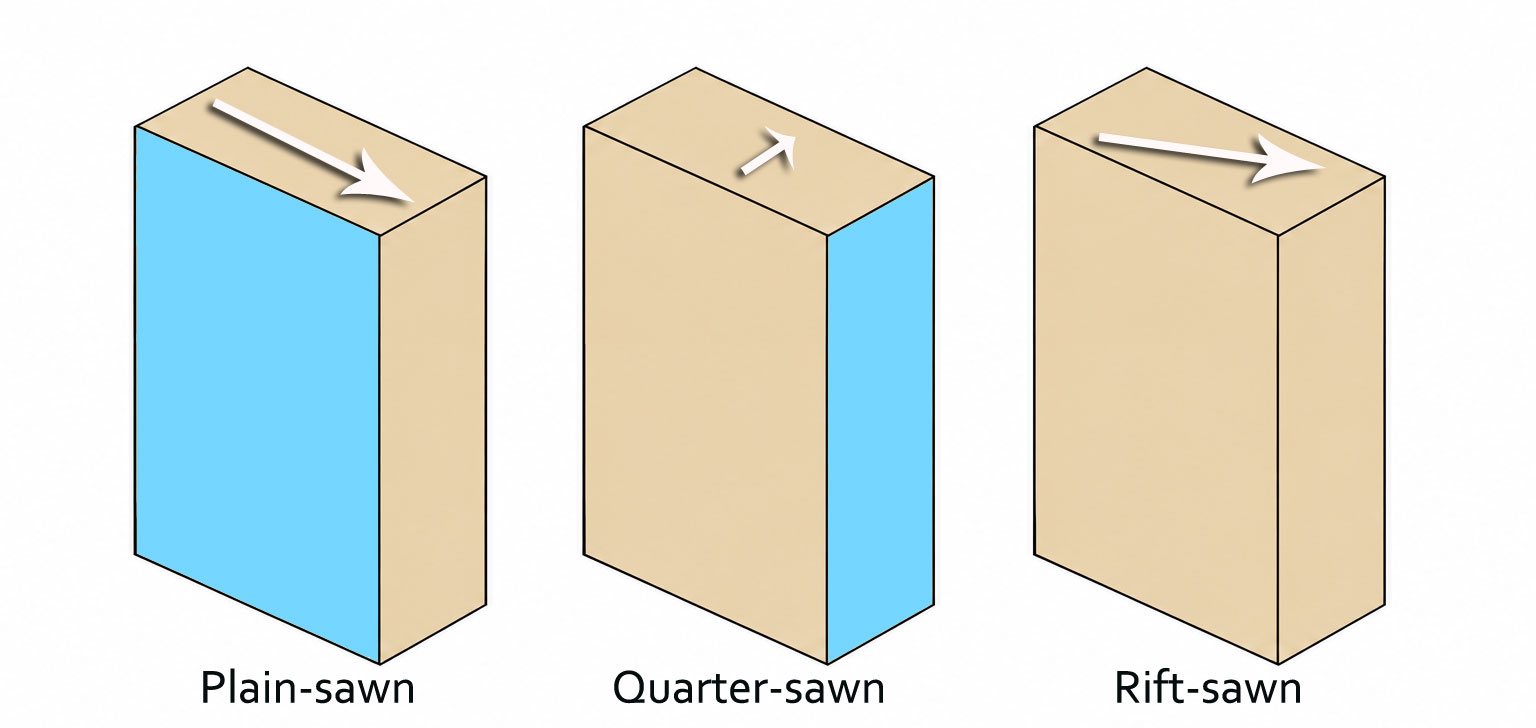
The two extremes are plain-sawn, also called tangential cut, and quarter-sawn, also called radial cut (i.e. perpendicular to the growth rings), while rift-sawn falls in-between. The white arrow represents the direction of the growth rings. The face highlighted in blue is where the figure is likely to be.
Plain-sawn is least stable dimensionally but allows to have the so-called “cathedral figures” appear on the largest faces, while the side faces will have quarter-sawn mottling figures (sometimes resembling pixelated motifs).
Quarter-sawn is the most stable dimensionally and will have vertical growth rings lines on the largest faces, often accompanied with nice mottling patterns which are often associated with chatoyance in some species, while the cathedral figures might or might not appear on the sides, depending on where the cut surface falls between layers.
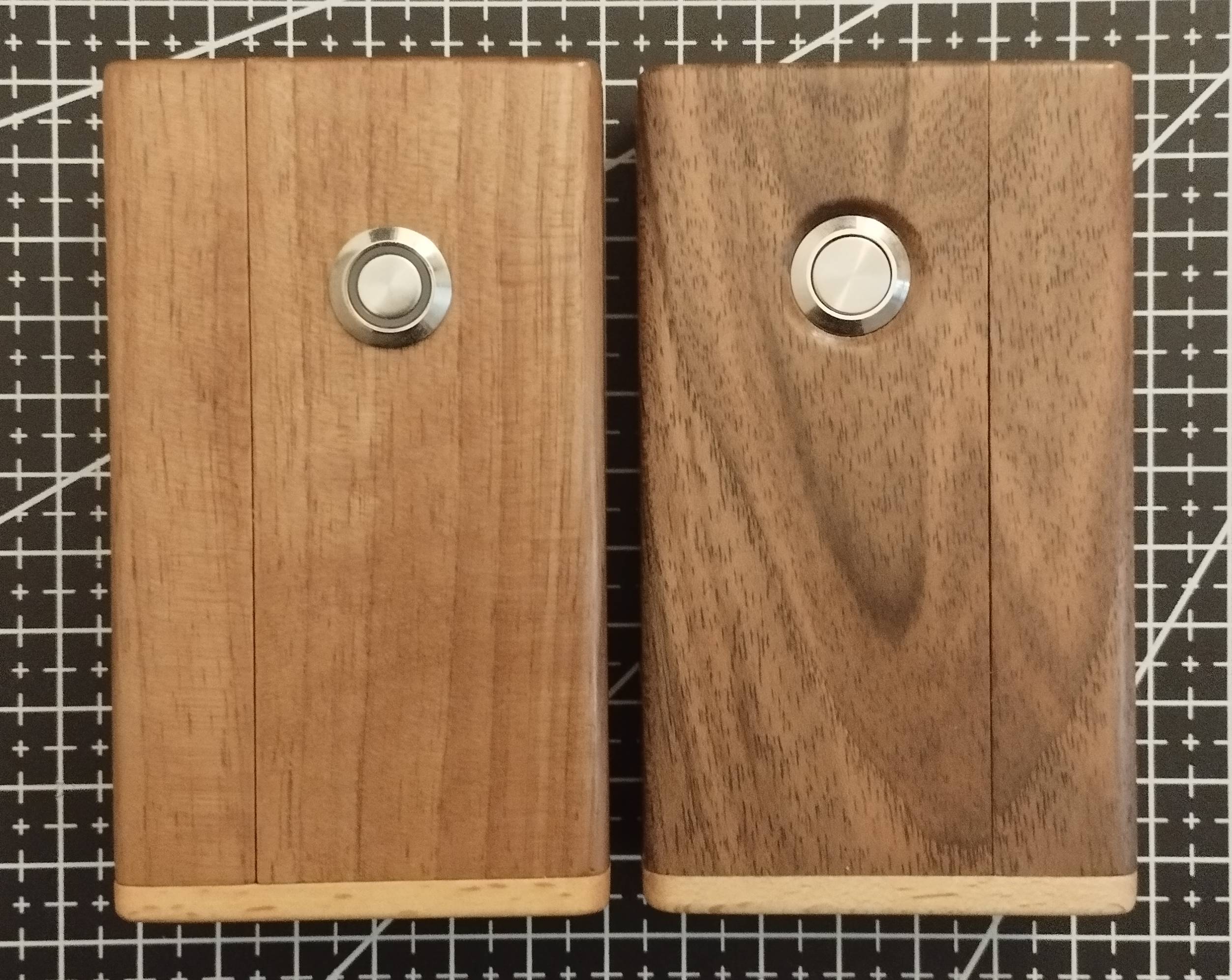
Here you see two European Walnut Ubiks. The left one is quarter-sawn and has high chatoyance (which evidently you can not see on a still picture) as well as vertical lines. The left one is plain sawn and shows the cathedral figure.
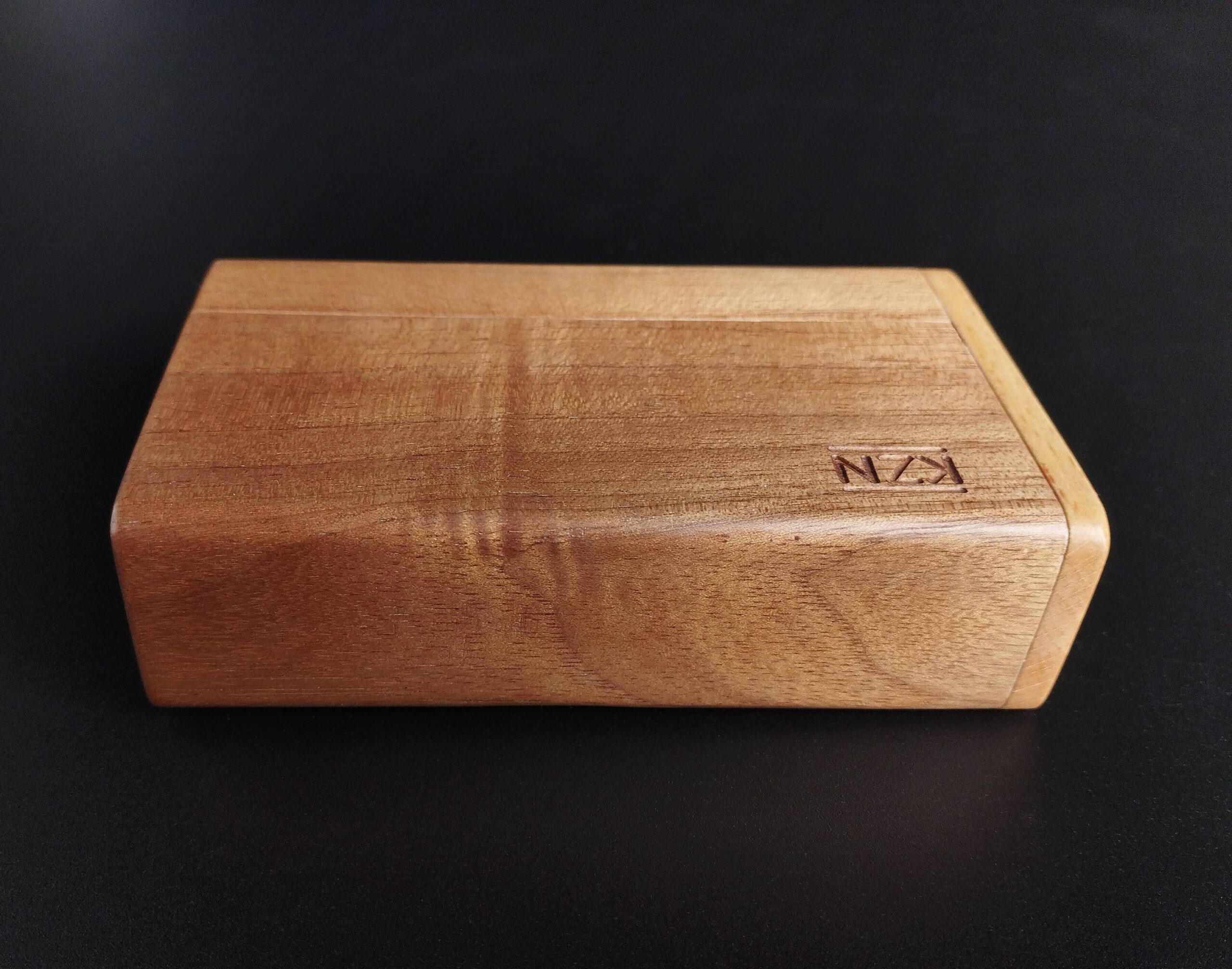
And here you see the cathedral figures on the sides of that same quarter-sawn Ubik. The slight compression wave figure is visible on both faces, and the way you look at it (i.e. a direct consequence of the cut-type) constitutes the difference between “wavy” and “quilted” figures usually, but we are getting off-topic.
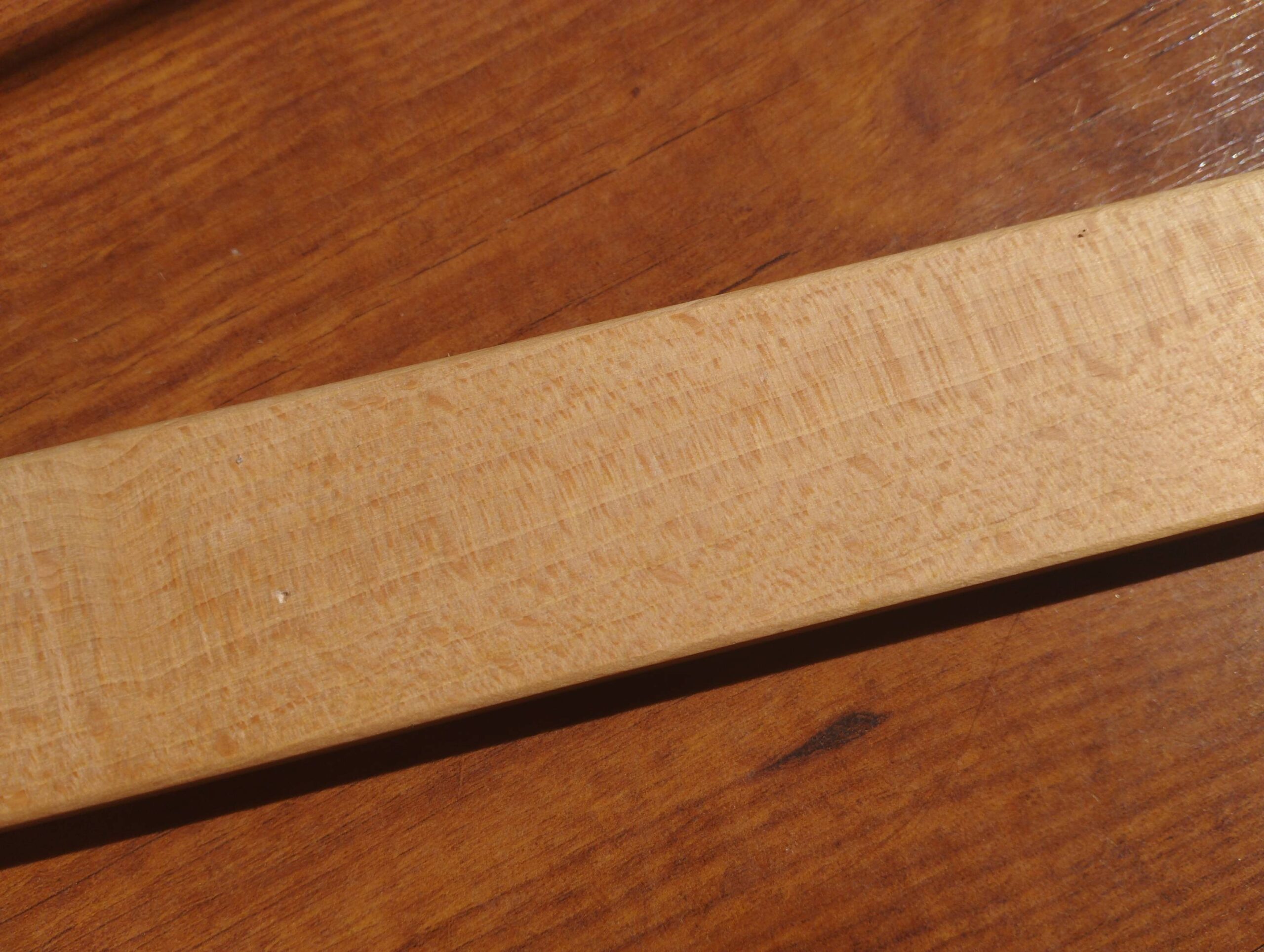
Above you have a good example of the pixelated mottling effect on a perfectly quarter sawn European Beech beam. It is not always that dramatic and it depends where exactly the surface plane falls: a little deeper and it might have looked very different. This type of cut is often sought after for European Sycamore and other “lace woods”, but not all people like it.
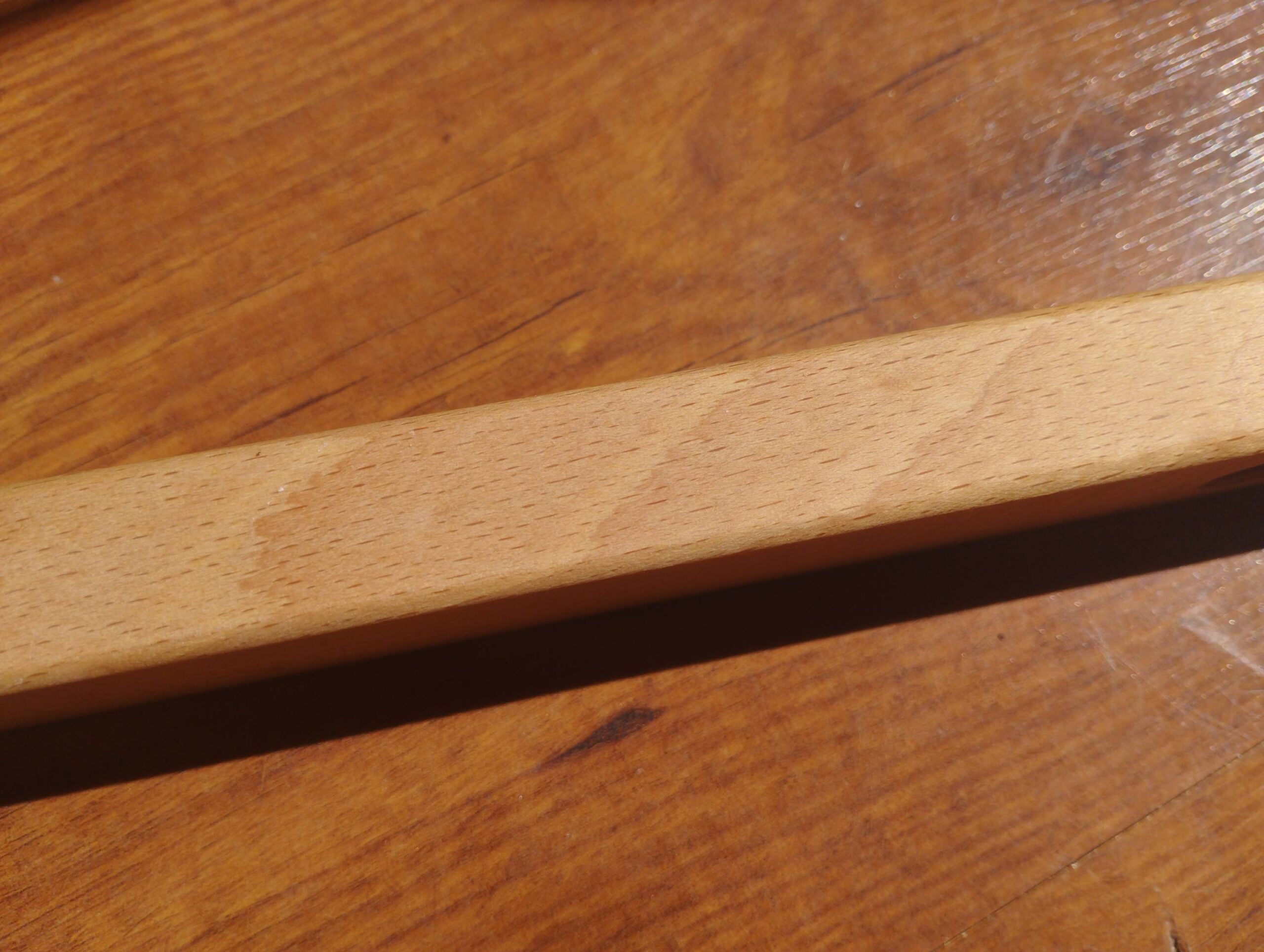
And on that same beam, as expected the sides show the cathedral figure when the plane crosses layer boundaries. It is rather subtle on Beech though.
I hope this post helped you understand some of the terminology I often use, and how what you see on wood pieces can be simply related to how that piece was oriented when it was cut from the tree log.