

Exactly like your most recently bought clothes, the paint on your living room walls, or actually like any object in your house, wood is subject to color change.
The processes at play are quite complex but can be boiled down to oxidation and UV exposure: both will make any wood change color over time. It is a process you can slow down but you can never prevent completely.
Oxidation is the process where oxygen from the air interacts chemically with molecules on the surface of the wood. Apart from putting your wooden object in a vacuum bag, you can not escape air exposure, it is everywhere.
While UV rays come from the Sun. But even inside your home, and although modern glass windows can block some of them, there are much more UV rays than you imagine. You can though in some cases avoid direct sun exposure, which will have a considerable impact, but over the years UV will eventually find their way.
Some color change chemical reactions are even photo-sensitive to visible light wavelengths and have been found to be triggered by indoor lighting!
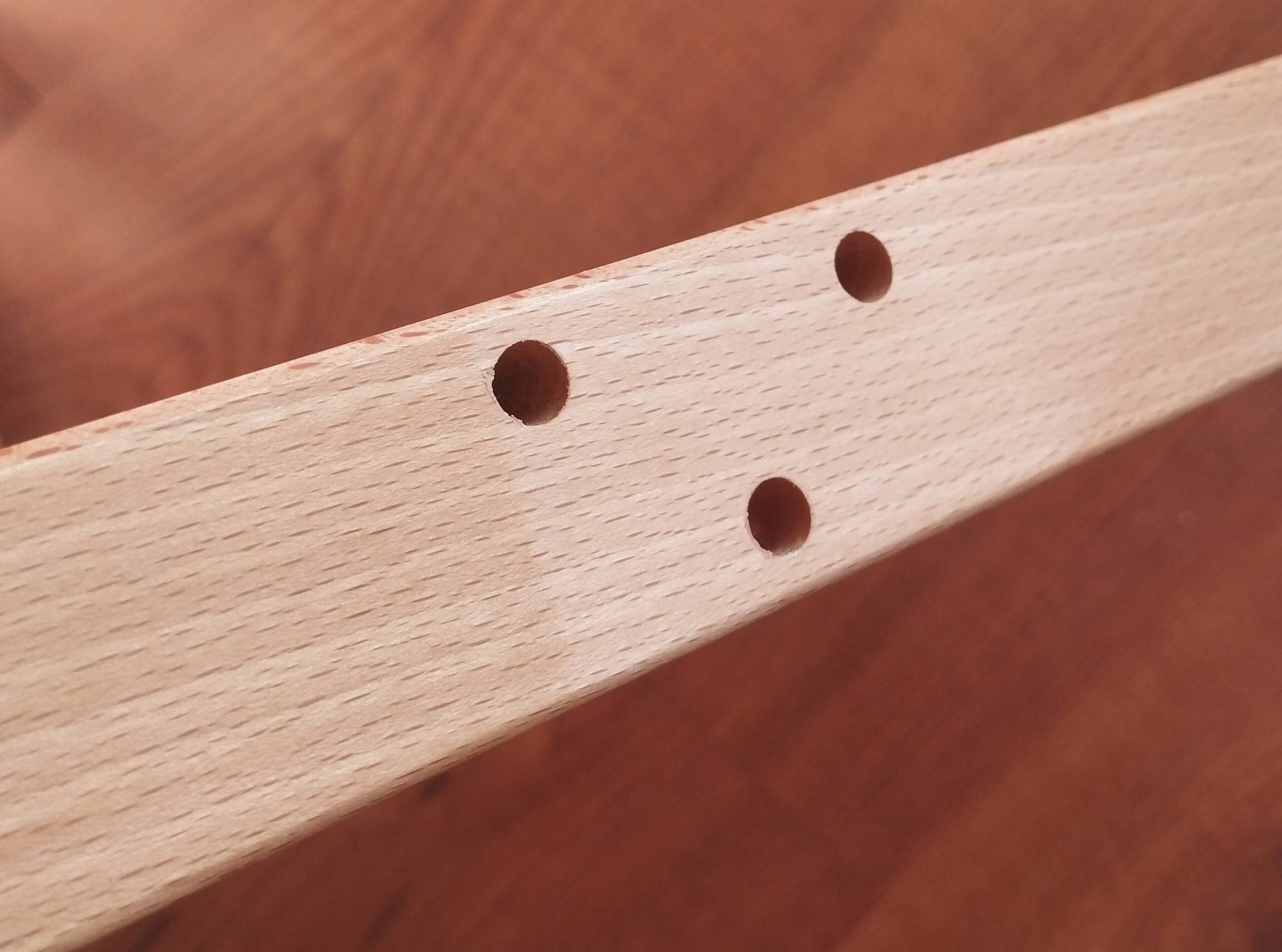
On this European Beech reclaimed beam, the effect is not as dramatic as on some other species but you can clearly see the difference on the part close to the holes where another piece was assembled in the past and blocked the light, while the area next to it darkened and yellowed somewhat.
As a rule of thumb, many light woods will darken over time. Some dark woods will lighten somewhat. And colored woods will tend to fade towards browns with colored tones but will not stay vivid forever. This is a bit sad, but this is inevitable. After centuries of abuse, nearly all woods are a dull gray.
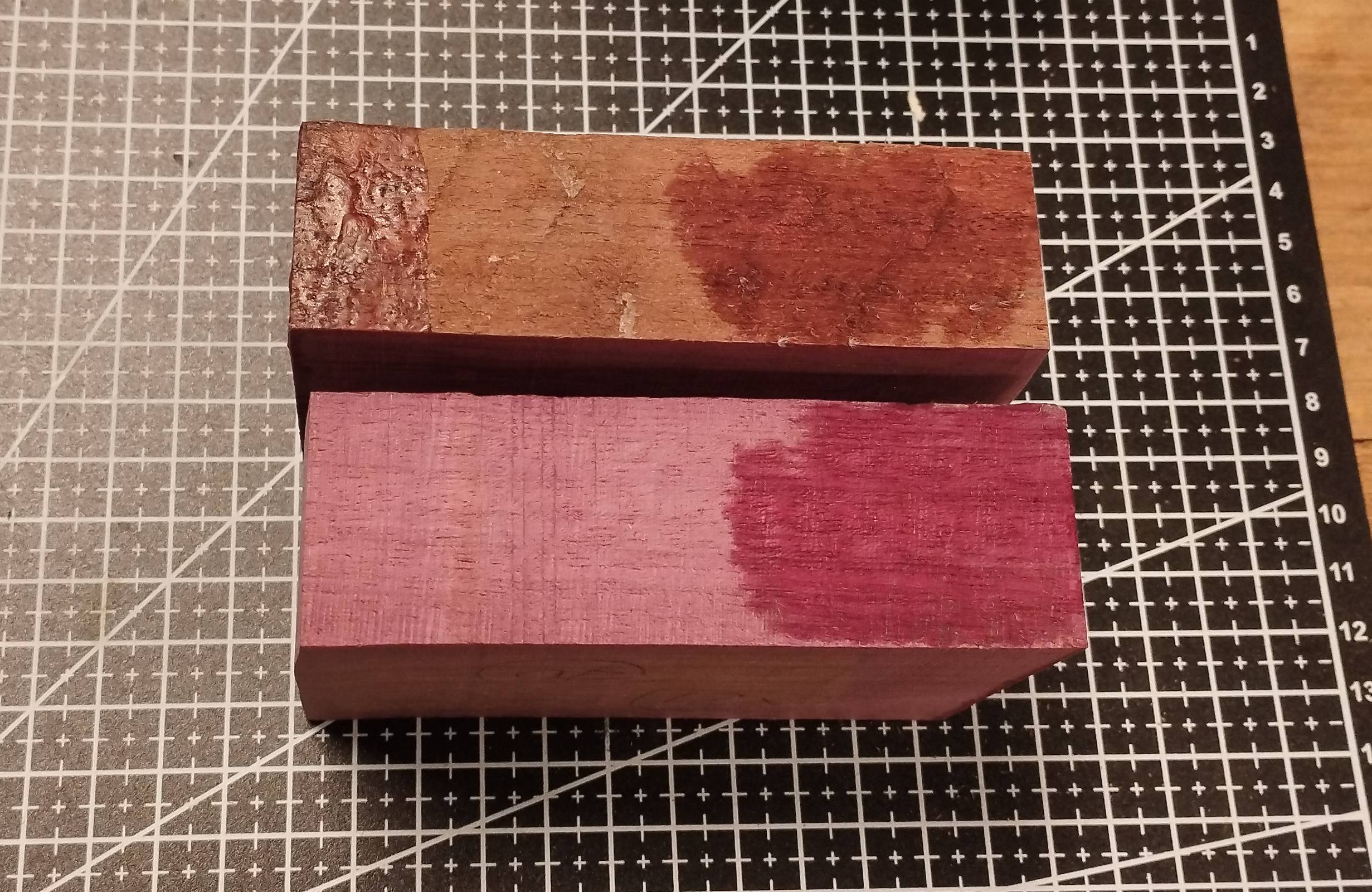
Here is a more dramatic example with two nuggets of Purpleheart. The top one has been exposed to full sun, possibly for years in my supplier warehouse, and the bottom one coming from the same blank was freshly cut. The right sides had some alcohol applied to get a better idea of the finished colors.
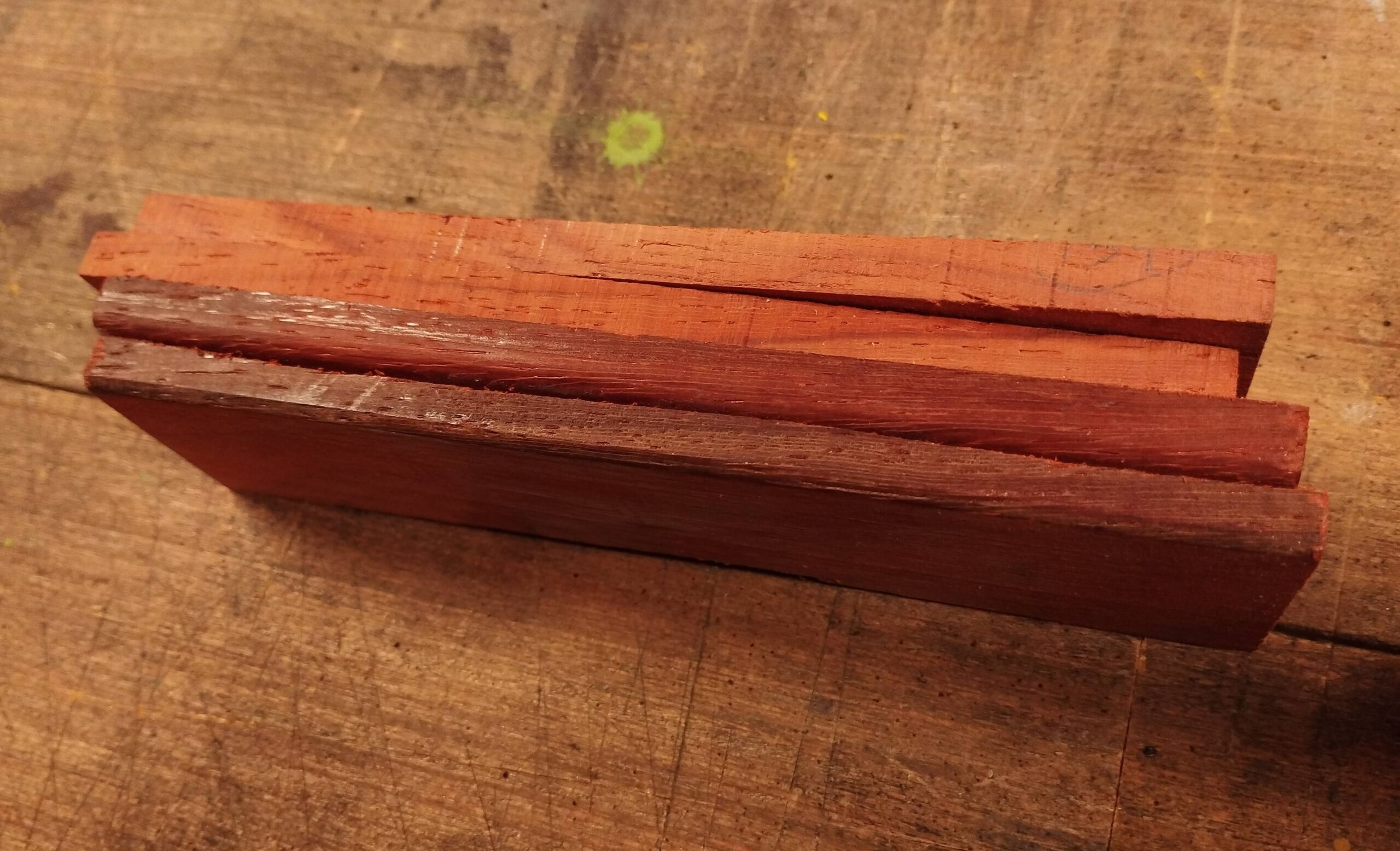
Here we have 4 African Padauk plates that came from a reclaimed piece of flooring (parquetry). The two bottom ones show rather well the darkening progression with the lower one turned a rich red-brown after years of exposure. And at the top the two plates were fresh out of the bandsaw and display a much more vivid orange-red.
Sanding any Padauk piece will instantly restore the vibrant red color, but this is somewhat impractical as it basically forces you to re-finish the entire object. But it is good to know that restoration is always possible, and this is true not only for this particular wood species.
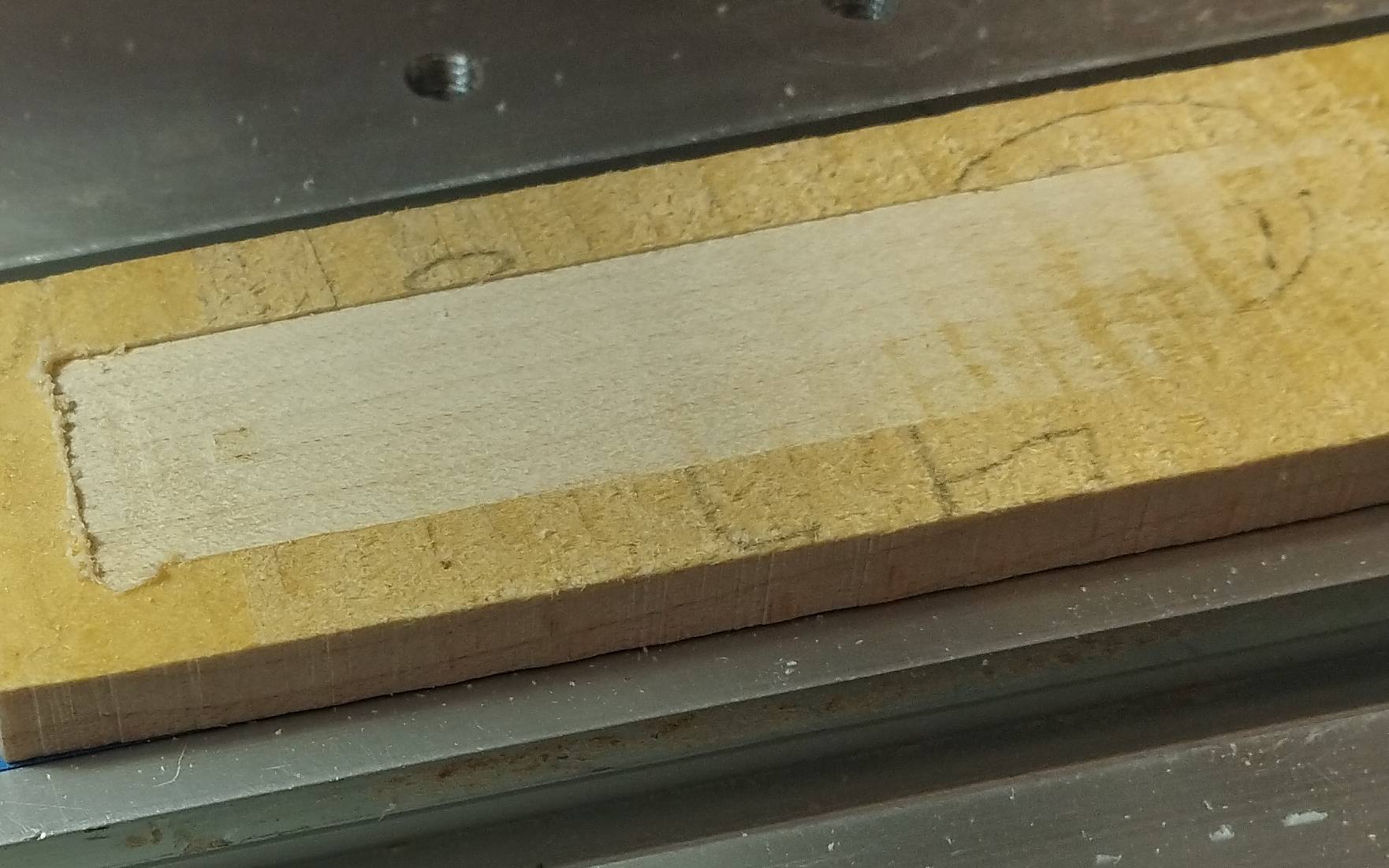
Here you see a Sycamore Maple plate that was also exposed to direct sun for a long time and turned yellow. The contrast is striking in the middle where some of the wood surface was just milled away, restoring the creamy white color below.
So what can we do about it? As we have seen, we can not avoid oxygen but we can limit to some extent UV exposure. Modern chemical wood finishes often contain UV inhibitors, that act like a sun-screen cream for the wood, but their protection will fade over time, the same way your cream needs to be re-applied regularly throughout the day.
The natural finishes I use lack those inhibitors chemicals though. And if color change would be a problem for you, then my only advice would be to avoid exposing your Ubik to the Sun as much as possible. But the best philosophy is to embrace the ineluctable and try to compose with it.
Colors might fade but the grain and veins will stay most of the time. And if the grain is very uniform, then the contrast with the bottom plate wood can become very important, as this will also stay no matter how muted the colors will end.