

Will this magical product really prevent your reality from dissolving? How are you even supposed to use it?! So many questions left unanswered!

Ubik is battery powered
Ubik is powered by a single standard off-the-shelf high discharge rate lithium-ion cell. You can use most cells with a *real* constant discharge rating of 20A and above.
Precise cell recommendations will be published and kept updated on a quarterly basis.
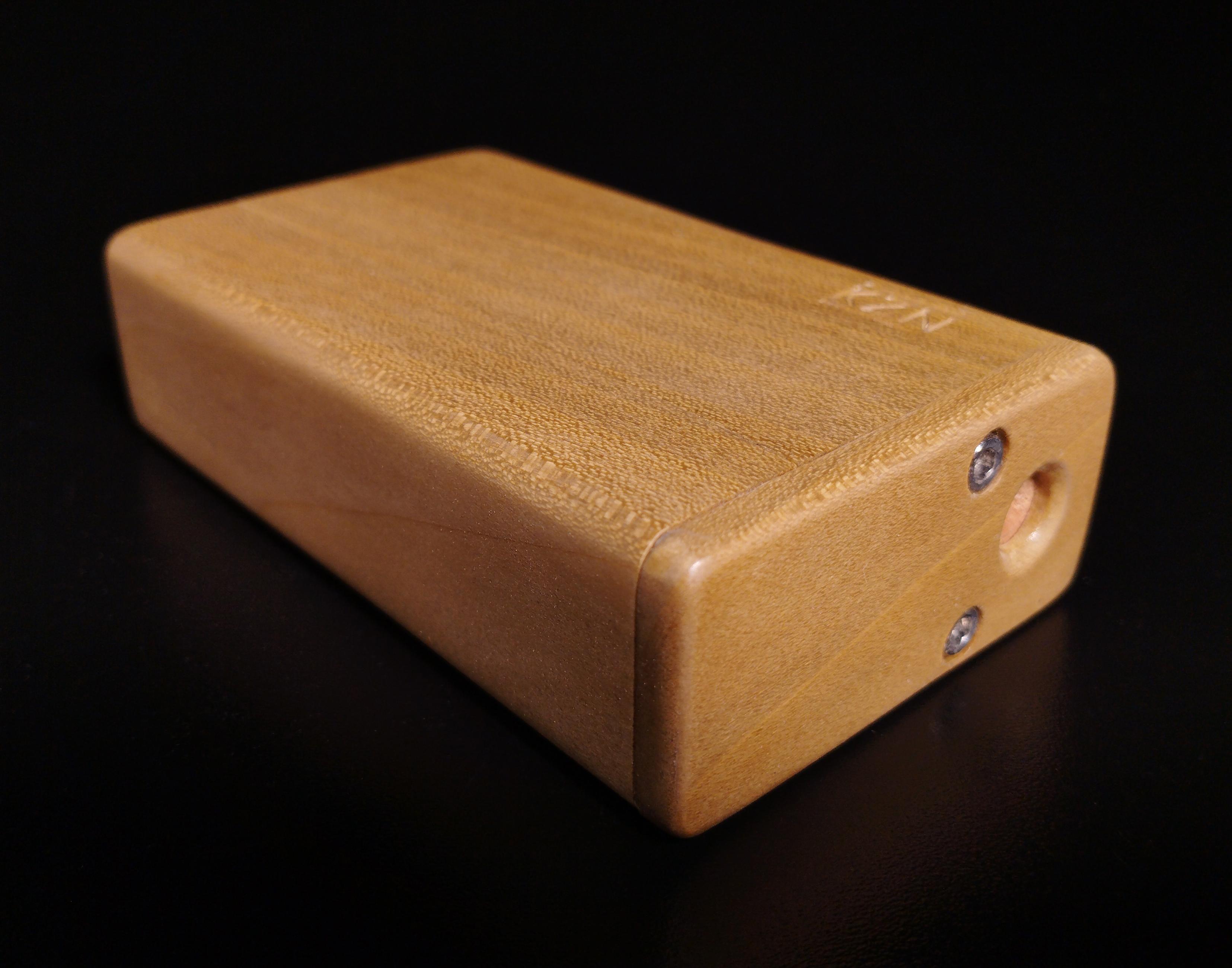
The cell can be easily swapped by opening Ubik magnetic wooden door, and it is safely held in place inside the battery holder.
The cell must charged externally, since Ubik does not support internal USB charging (for now).
Ubik has no “off” button, but you can easily and completely deactivate it by just swapping the cell polarity inside the holder. This prevents any accidental activation while you transport it.
This kind of cell is really powerful, and removable cells present significant safety risks. With great power comes great responsibilities, so you must carefully and strictly follow the provided safety instructions.
Ubik comes in two sizes
When getting your Ubik you need to select the cell size it uses, as it determines its overall size and weight.
Ubik can use the 18650 standard “legacy” cell size, which is more compact and lighter. Alternatively, it can use the more modern 21700 cell size which is slightly bulkier but offers considerably more run-time and overall a hotter vape.
An illustrated guide depicting the differences is provided when you order. This will help you decide which size is best for you.
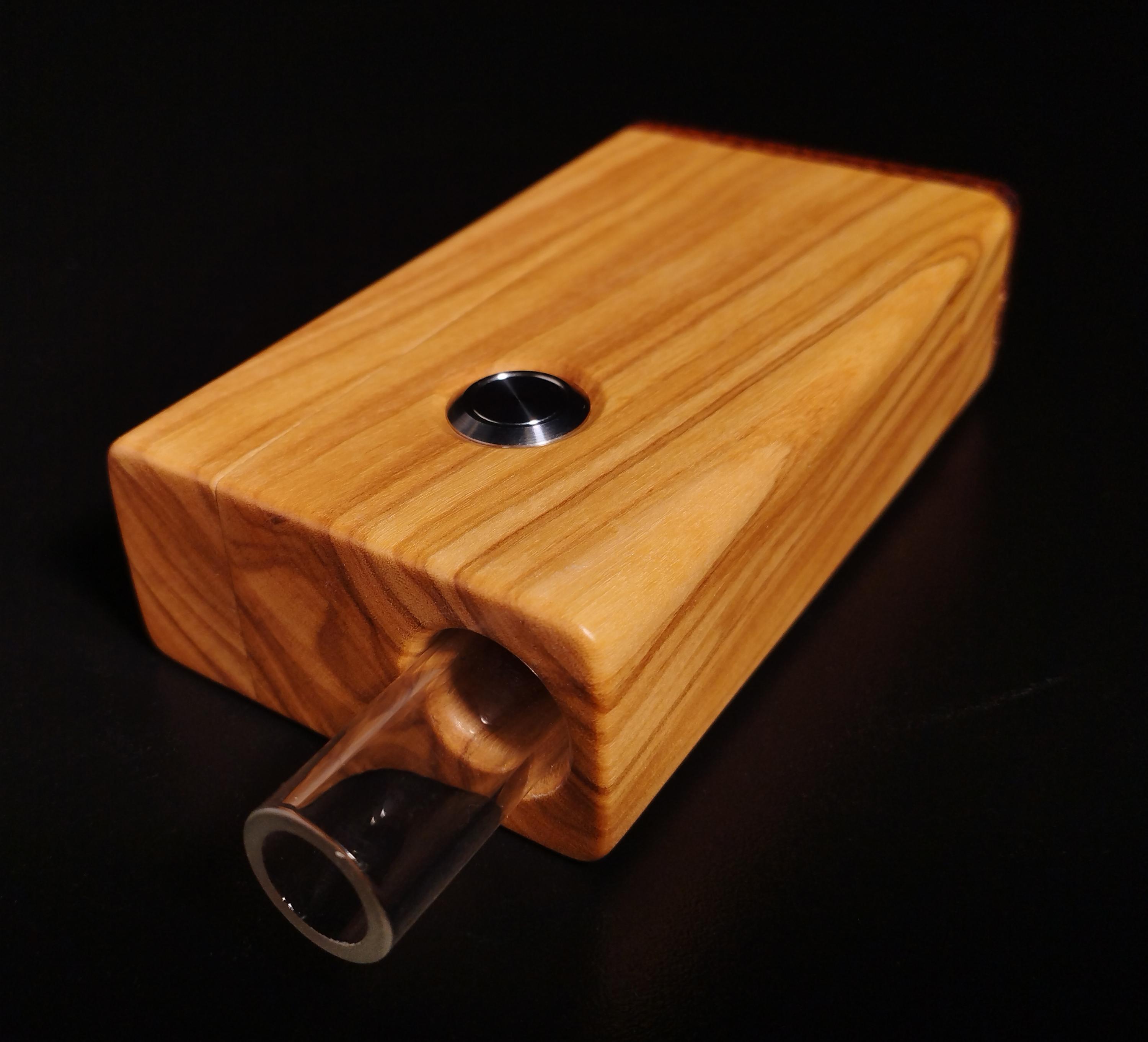
Ubik is full on-demand convection
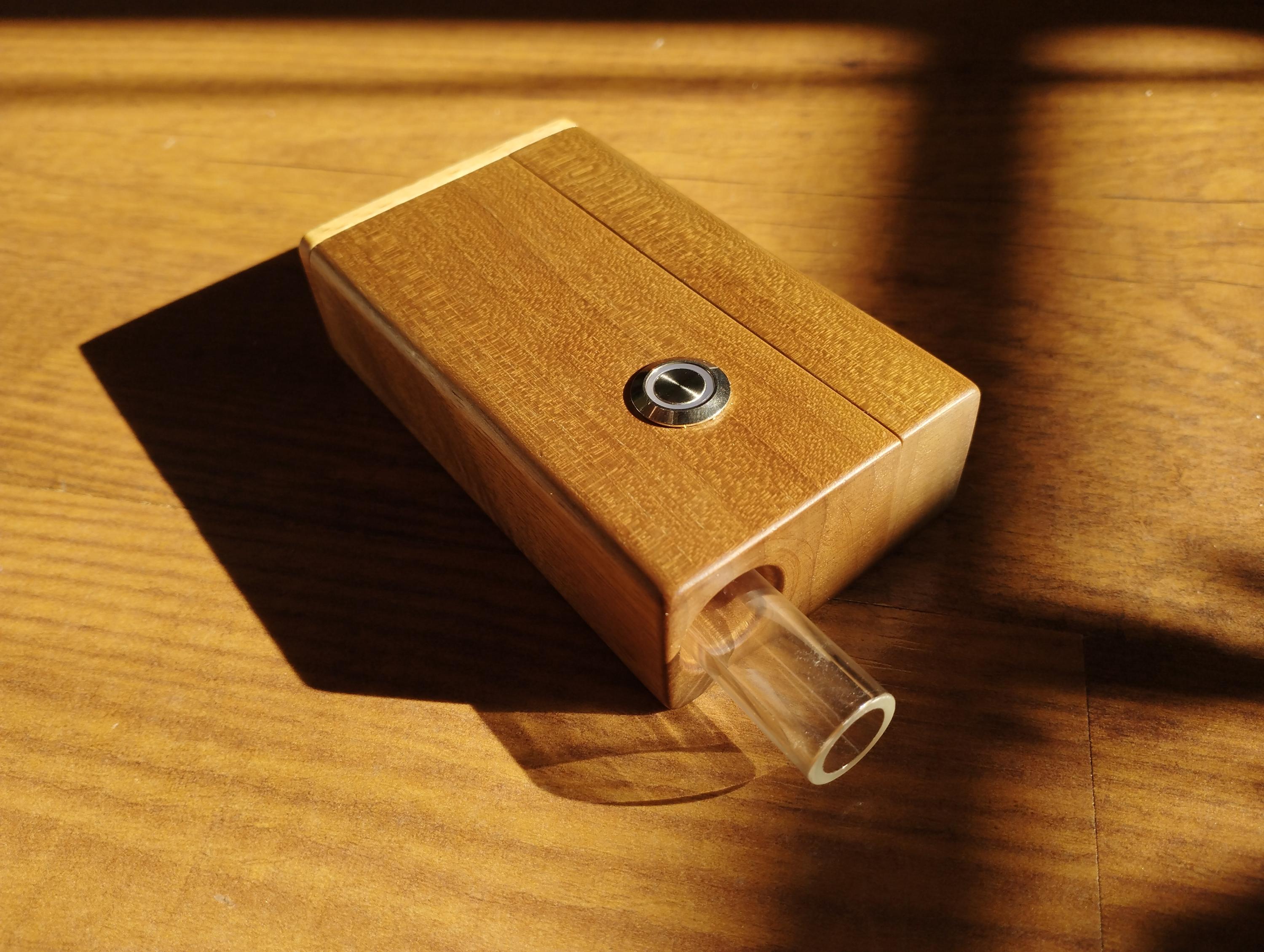
The dry herb material to be vaporized is loaded inside a stainless steel basket mesh placed near the tip of the provided glass straw, which you insert into Ubik, and which is held in place by a silicone o-ring certified for food contact.
Ubik is compatible with most 14mm outer diameter 3rd-party stems on the market. The standard straw length is 80mm.
Ubik only heats when you activate the trigger. When completely cold, you need to pre-warm it up by doing a blank primer without drawing. About 5 seconds of trigger time is enough (give or take) depending on ambient temperature.
Once primed, you can begin using it as you would normally. Before each draw you pre-heat for a few seconds, then while keeping the button engaged you bring the straw to your mouth and you start drawing, holding the button for a few seconds. You then release the button and can keep drawing for a while, using the residual heat.
Exact timing parameters depend on your preferences, the vaporization temperature you are trying to achieve, the selected heater power in your Ubik, as well as the battery state of charge. It’s therefore hard to give a definitive answer, but 4 seconds preheating and 4 seconds while drawing should already give pretty good results in most cases. This is a good starting point and you will soon learn what works best for you.
The herbal material is only subjected to heat while you draw on the straw, and the actives are extracted by the hot air stream, which is called convection heating. While not using it, your herbs don’t cook unnecessarily. This helps preserve their taste and freshness for longer.
Although it is perfectly possible to space your hits out, it is less efficient if you let Ubik cool down fully. So while it is on-demand, you will get better results if you do a session and take several inhalations not too far apart. This preserves battery life.
Ubik is unregulated but protected
The extraction temperature depends on how long you keep the Ubik heater engaged. It is thus unregulated in the sense that there is no active temperature control: you are in charge. As you will see, however, the way Ubik is designed makes it forgiving and really easy to control.
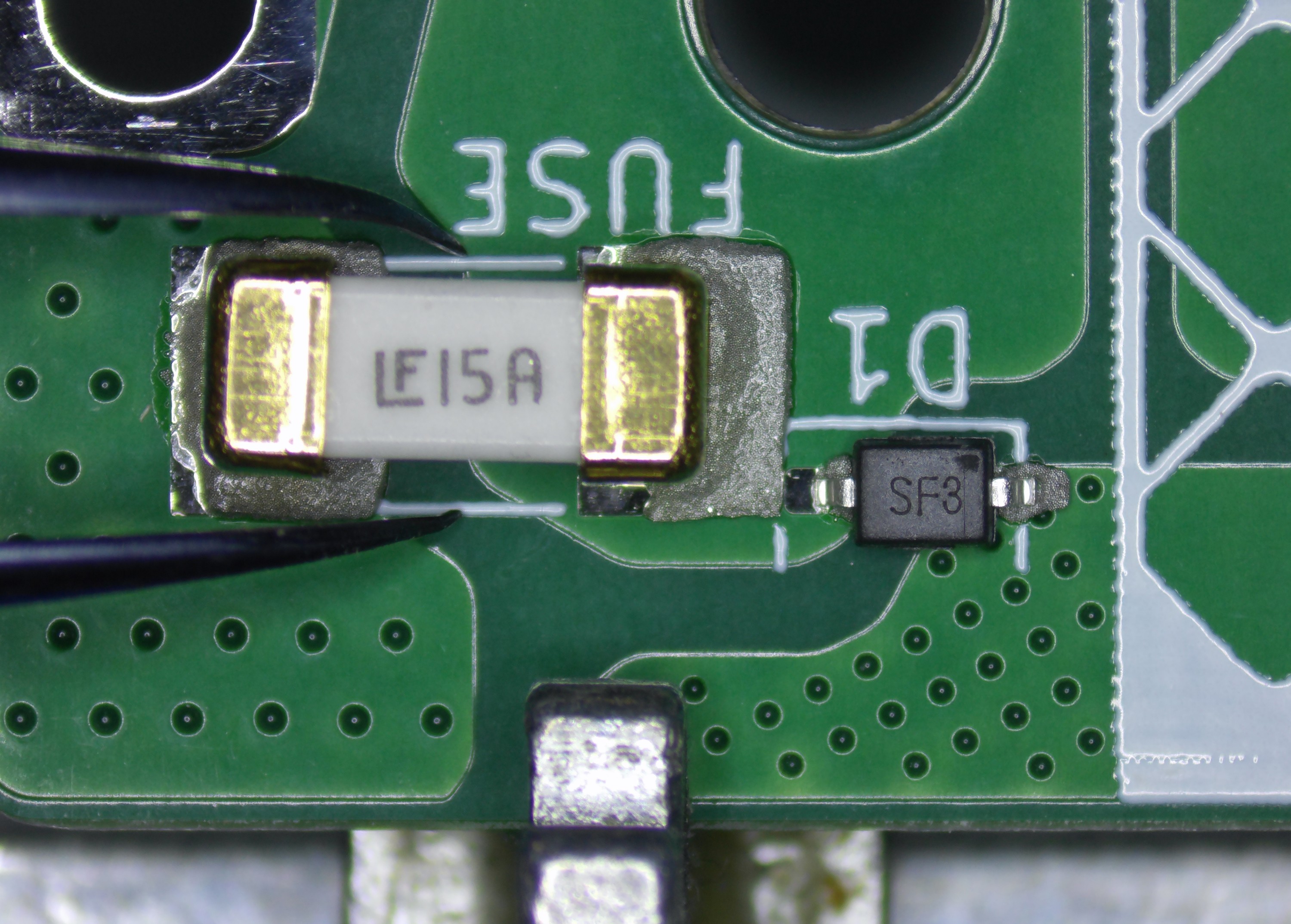
Ubik has electronics inside, there is a printed circuit board (PCB) which offers the following protections:
- Short-circuit protection against catastrophic failures in the form of a surface-mount fuse.
- Low-voltage and weak cell protection, which automatically cuts power to the heater when the cell voltage becomes too low, to protect the cell from over-discharge. When this happens the LED ring inside the trigger button flashes red.
- Heater commutation is performed by a MOSFET, a special kind of power transistor (electronic switch), which means the trigger button is only switching a small signal on and off and thus is not at risk of having its contacts slowly eroded by the high current switching as in purely mechanical designs.
- Reverse polarity protection, which prevents damage to the circuit when the cell is inserted the wrong way round, and also serves as a mean to purposely deactivate Ubik during transport.
I hand-populate all PCBs myself under the inspection microscope and then reflow-solder them using a lead-free process. I then thoroughly clean them in an ultrasonic bath. This way I have full control on the entire process and know exactly what goes in or not.
Ubik has three interrelated strengths
The first strength is flavor. When designing Ubik my focus always was on getting the best possible taste, and preserving that taste for the longest time. It starts with a meticulous materials selection and ensuring the vapor path is pure and fully isolated.
Anyone who has used manual convection vaporizers before knows that the taste spoils rapidly if the loaded material is heated unevenly (the infamous hot spots) or if you overcook by accident by exposing it too soon to a high temperature.
This is where the two other strengths of Ubik come into play: for an unregulated and manually operated vape, it is very easy to use and forgiving. There is a carefully tuned amount of heater lag, meaning your timing does not have to be perfect and only has to fall into a relatively large band.
It’s not impossible to combust with Ubik, but you really need to operate it incorrectly for it to happen.
Then finally the extraction is very uniform, there are no hot spots or no weird tunneling effects. Most users do not even stir their bowl, but I like to do it near the end to get another couple of hits.
These three combined strengths allow Ubik to preserve the taste of your plant material until very far into the session.
Ubik has a clean and isolated air-path
Only 3 materials come in contact with the vapor: stainless steel, glass and some wood.
The heater is a SS430 stainless steel resistive element, an alloy I selected due to its complete absence of nickel (which is an allergen). This element is encased in a glass insulator, which in turn is surrounded by a SS304 stainless steel liner to isolate the hottest area fully from the body wood.
Hot air then travels through a SS304 mesh screen, which prevents dust and debris from falling into the heating element. Next it goes right into the straw, at the tip of which the plant material to vaporize resides, inside a second SS304 mesh screen acting as a bowl. From there the vapor is generated so it travels only through the glass straw before reaching your mouth and then your lungs.
The electronics area is isolated from the air-path by a natural cork insulator piece, which I reclaim from Champagne bottles, ensuring it is free of any glues and rated for food contact.
Ubik has adjustable air flow
Introduced in the latest pre-production batch, Ubik now has a variable air-intake in the form of a rotating wood piece called the VariFlow disc.
The disc has 3 different sized hole patterns, allowing you to adjust how restricted or open the draw is. A more restricted intake yields a denser and hotter vapor, while a more open intake can feel cooler and easier on the lungs.
You can on top of that adjust the restriction in either direction by having the load more or less tamped or loose inside the bowl.
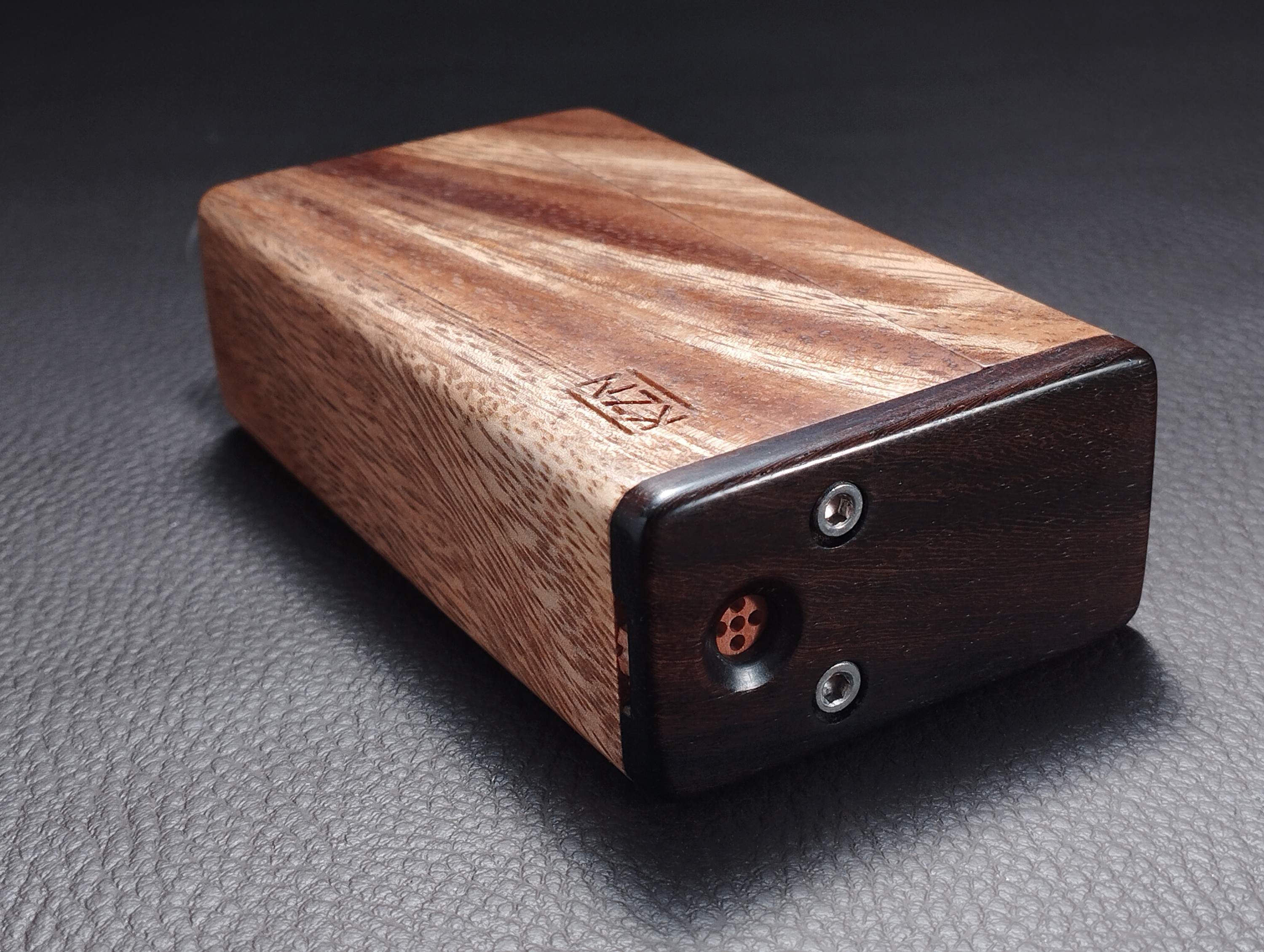
Ubik is fully serviceable and repairable
The only glue in Ubik is to secure the 8 door magnets in place, and they are not in the air path. Everything else is fastened by screws, two for the bottom plate and two to hold the PCB.
The trigger button is held by a nut and connected to the PCB via a fast connector, meaning it can be changed without using any soldering iron.
The heater element is connected to the PCB through a spring-loaded terminal block and can be removed in case any repair might be needed. Since this operation requires some dexterity, ideally I would prefer that you send your Ubik back to me to take care of.
So far no failure has been reported in the wild, but it is good to know that the worst-case scenarios are covered.
Ubik is custom-made to order
They are handcrafted in small batches by myself in Paris. You can customize many aspects of Ubik when you order: of course the wood species used, but also many fine-tunings like the heater power and down to which hand you prefer to hold it with.
You made it so far and I hope I answered all your questions around “what” Ubik is. In the following updates, I will finally address the remaining ones around “when” and “how”, as well as the pricing scheme.