

In the first part of this article, I laid down my strict sourcing policy, around refusing to offer any species threatened by extinction. In itself you might argue that it would not achieve much: the volume of wood I’m using is clearly negligible, and it won’t prevent these trees from being felled in the first place.
While this is true, I’m doing my best at my very modest level. And I do believe that by not purchasing these species from my suppliers, I’m at least sending the message that the demand is somewhat reducing. As customers we all have the power to vote with our wallets.
But I don’t want to sound patronizing, my goal is only to have my own actions aligned to my moral compass. If others follow, it’s all for the better.
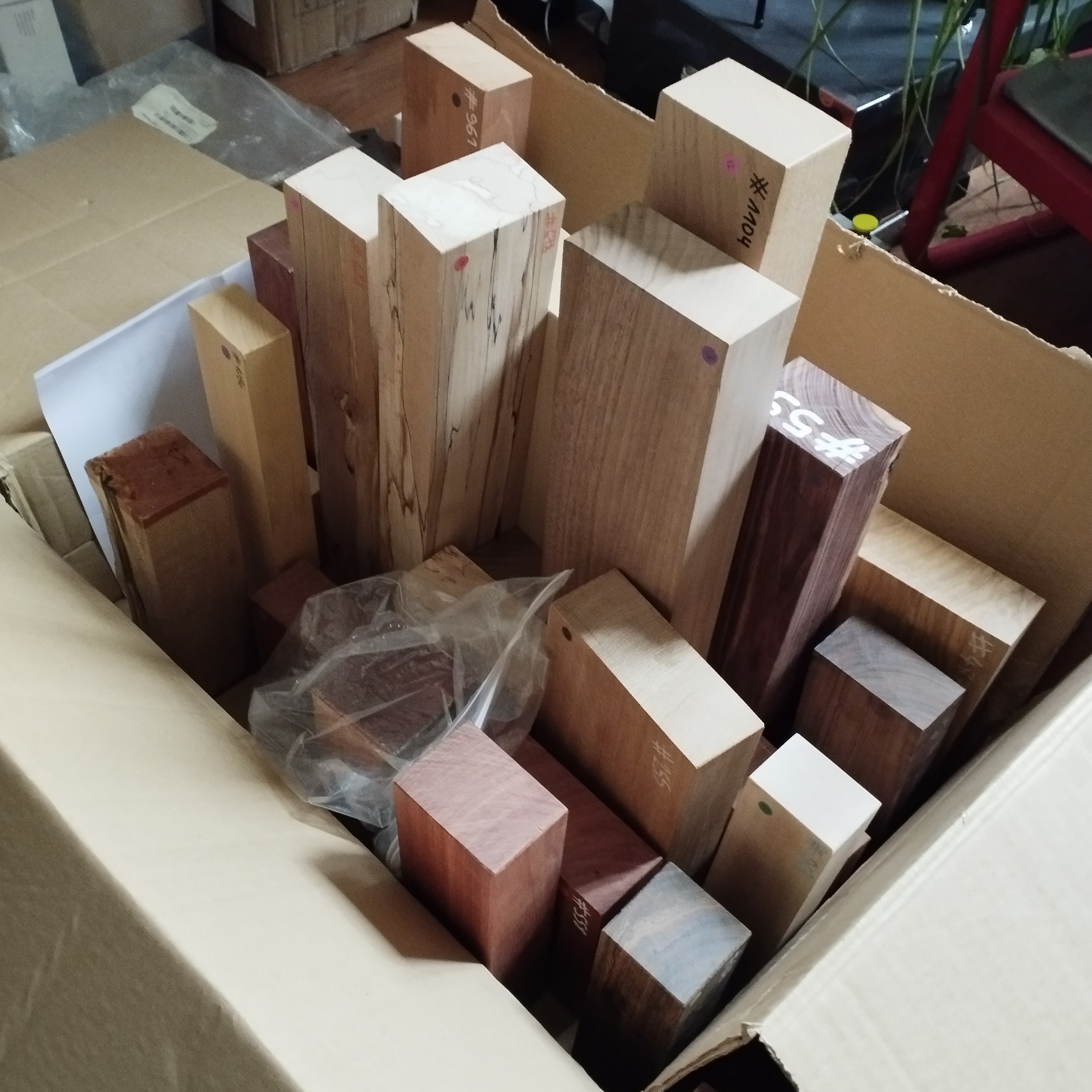
Furthermore, I’m not stopping there. One other key aspect of my policy is my deliberate preference towards locally sourced goods and sustainable practices in general. I will favor suppliers (saw mills or traders) sourcing their woods from sustainably managed forests here in France.
The plan is to offer 6 staple local species, all coming from fully PEFC certified forests and mills, as standard choices for my creations. They will all be proposed at the same entry price, with the hope that it might incite you to seriously consider them. These species are:
- European Ash (Fraxinus excelsior)
- European Beech (Fagus sylvatica)
- European Sycamore (Platanus x acerifolia)
- European Walnut (Juglans regia)
- Wild Cherry (Prunus avium)
- Sycamore Maple (Acer pseudoplatanus)
In a future post, I will present these 6 standard woods in greater details. So stay tuned!
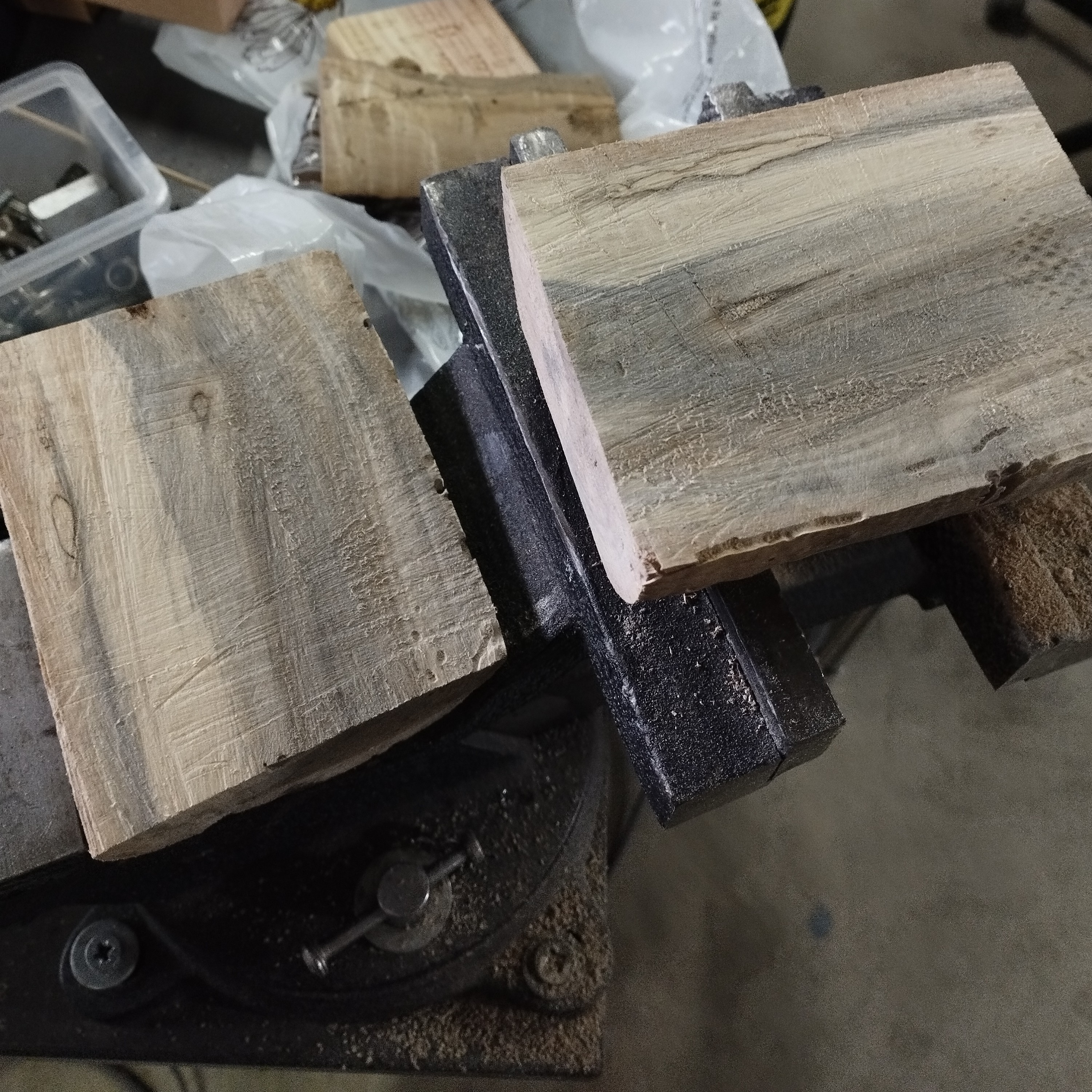
Alongside the 6 standard but nonetheless excellent woods, rarer species and exotic ones, figured as well as spalted woods will also be available at an extra cost.
They will be offered at a higher price for multiple reasons, including scarcity, higher acquisition cost, higher transportation cost, but also because many exotics are quite hard and dull tools pretty fast, so I got to factor in my bandsaw blades, milling cutters, extra sand papers for finishing etc.
And some produce very irritant dust and require more precautions when working. Some can split or have a lot of defects in their blanks so the yield is low.
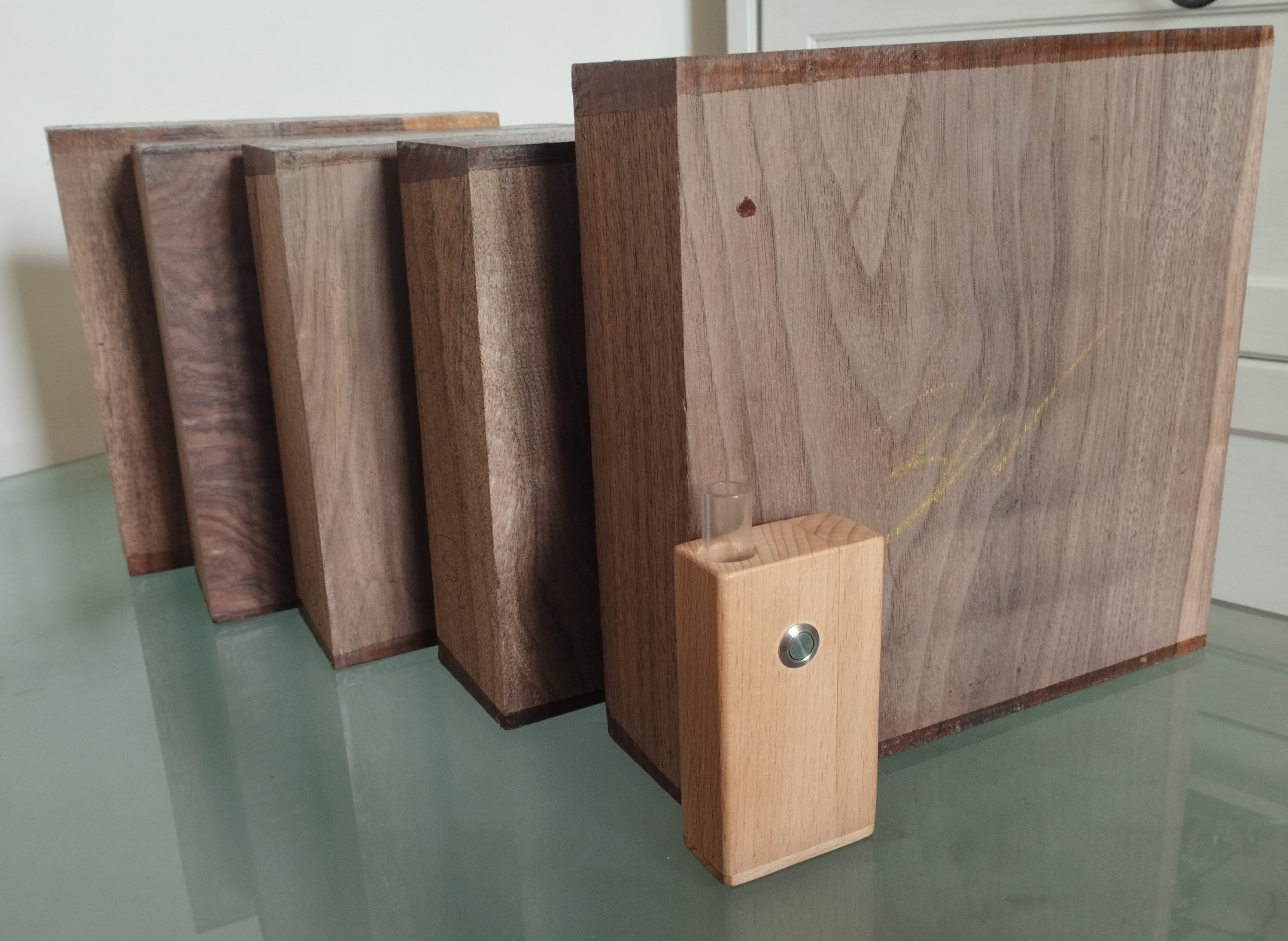
Here are for instance some Figured Walnut and Caucasian Walnut blanks waiting for their turn:
I wish I could conclude this second part on a more positive note, but I read several reports claiming that given the current trend, somewhere between 2050 and 2070, close to 70% of our local species will likely be destroyed due to climate change and its effects (most notably longer cycle life for parasites of all kinds etc)
Many conservation projects are underway, and as I said for the major part our French forests are well managed and plans are established for the long term. But the rate of change is so rapid that it creates considerable challenges, and some particular species already experience an alarmingly high mortality rate.
So if we want to keep enjoying wood, we all need to do our best at our level, even if we feel that our actions have only limited impact.