

In a previous article, I introduced the six French classic woods offered at the same entry price for Ubik bodies and plates. Today we are going to explore the possible combinations of these classics.
I could simply propose all 36 possible pairs and call it a day, but it turns out it is not that simple, as some combinations do not work particularly well.
First of all, I would like to clear a misconception: selecting the same wood for the two elements does absolutely not look bland in practice! In fact, and due to the way the wood fibers end at a perpendicular angle to each others, it creates a rather fascinating two-tones effect that changes greatly depending on light incidence and even reverses at times.
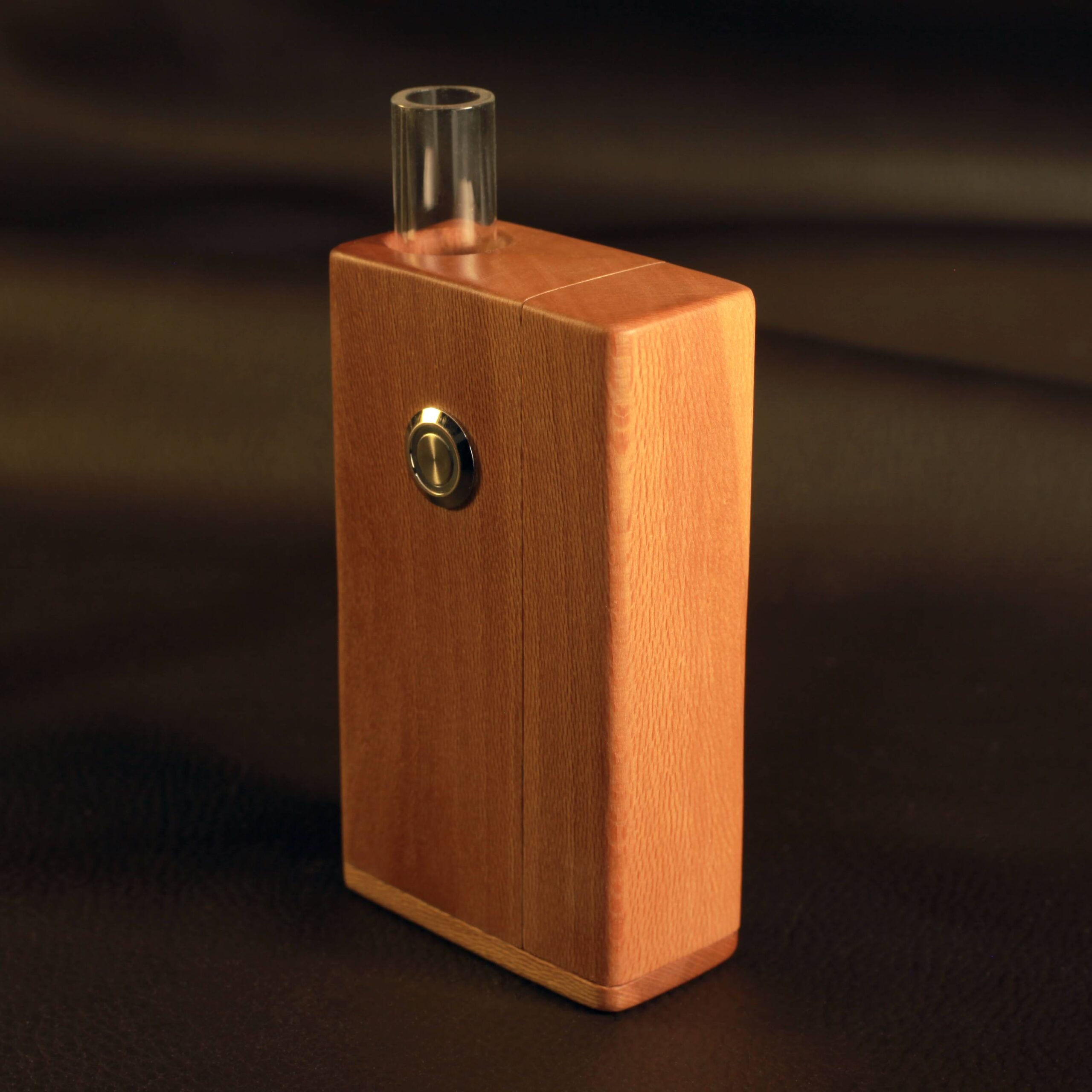
Taking Sycamore as an example, in the above picture and despite both parts being the exact same wood taken from the exact same blank, you can clearly see the effect I am trying to describe.
End grain of the plate ends on the small sides and appears much darker than the body sides. While on the faces and with this light incidence, the plate appears much lighter than the body.
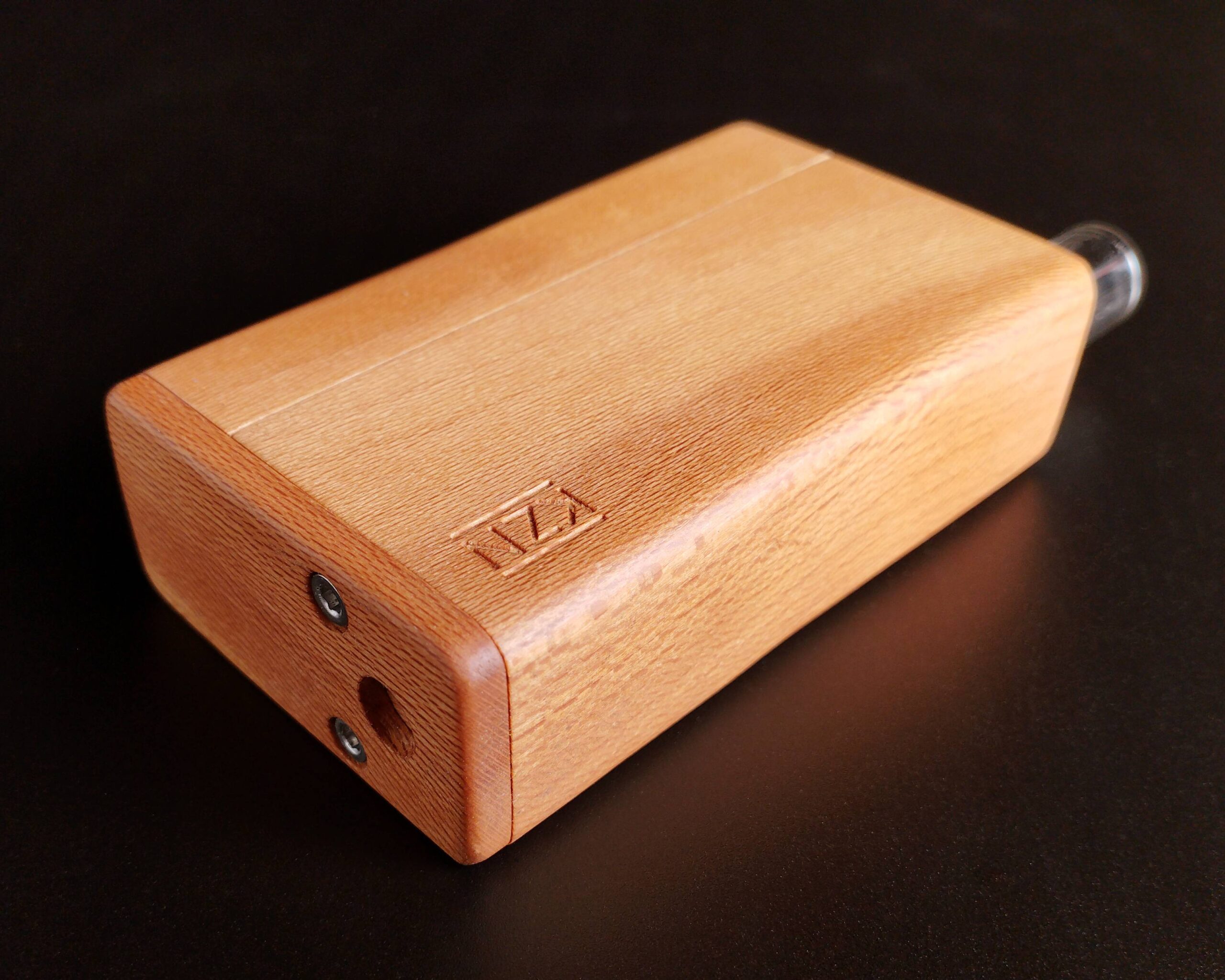
And now above, same Ubik, just a different angle, and this time the plate appears much darker than the body overall.
The effect is not always so dramatic and can be more subtle on Maple for instance, but it tends to be nonetheless always present. And to me, this makes the same-wood combinations totally valid and a choice that should not be overlooked.
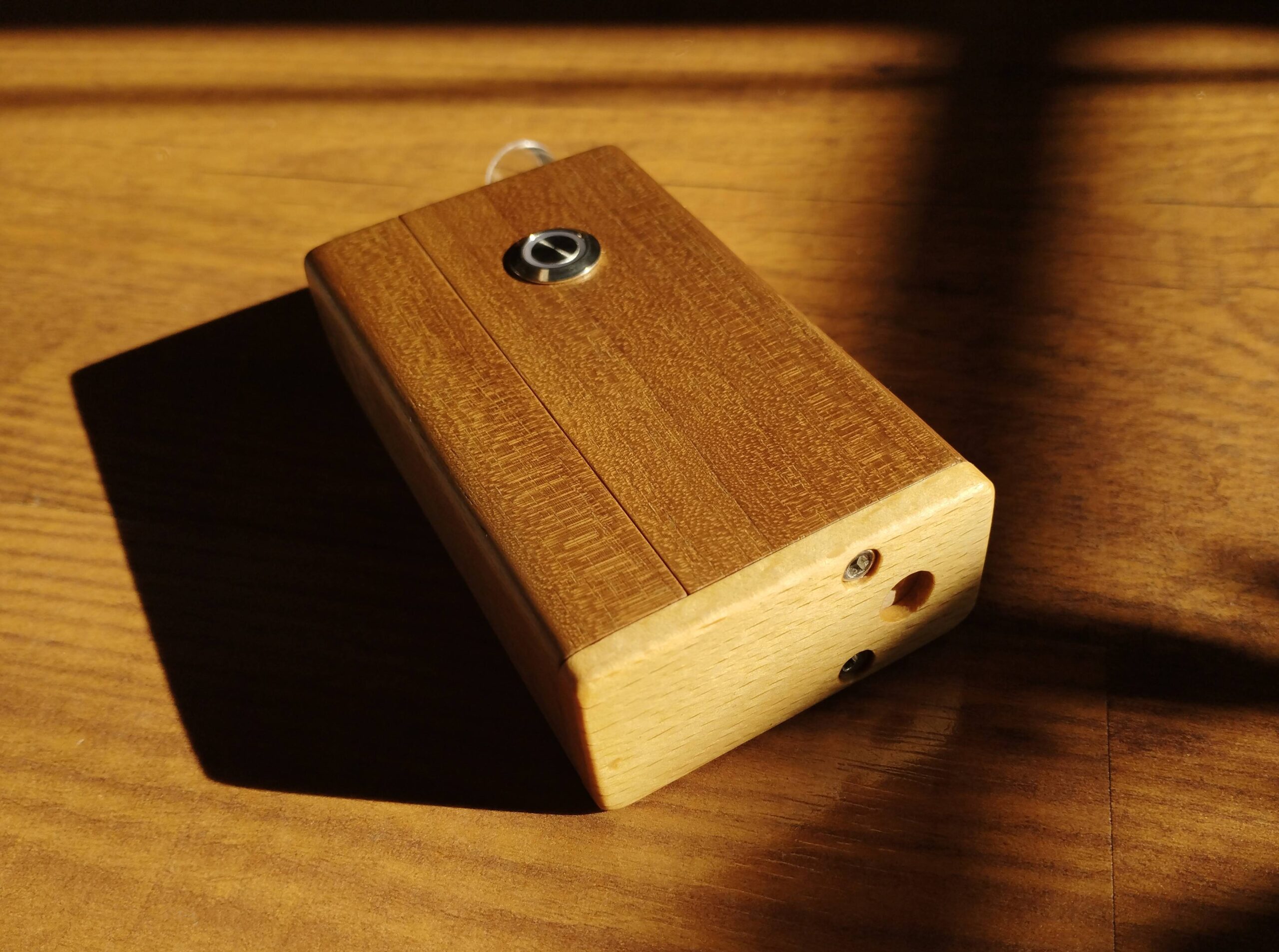
While not necessarily to everyone’s taste, I find that high contrast combinations also work very well. Above you can see one of my personal Ubiks (and yes, I am left-handed) with Walnut body and Beech plate.
This is a combination I particularly enjoy.
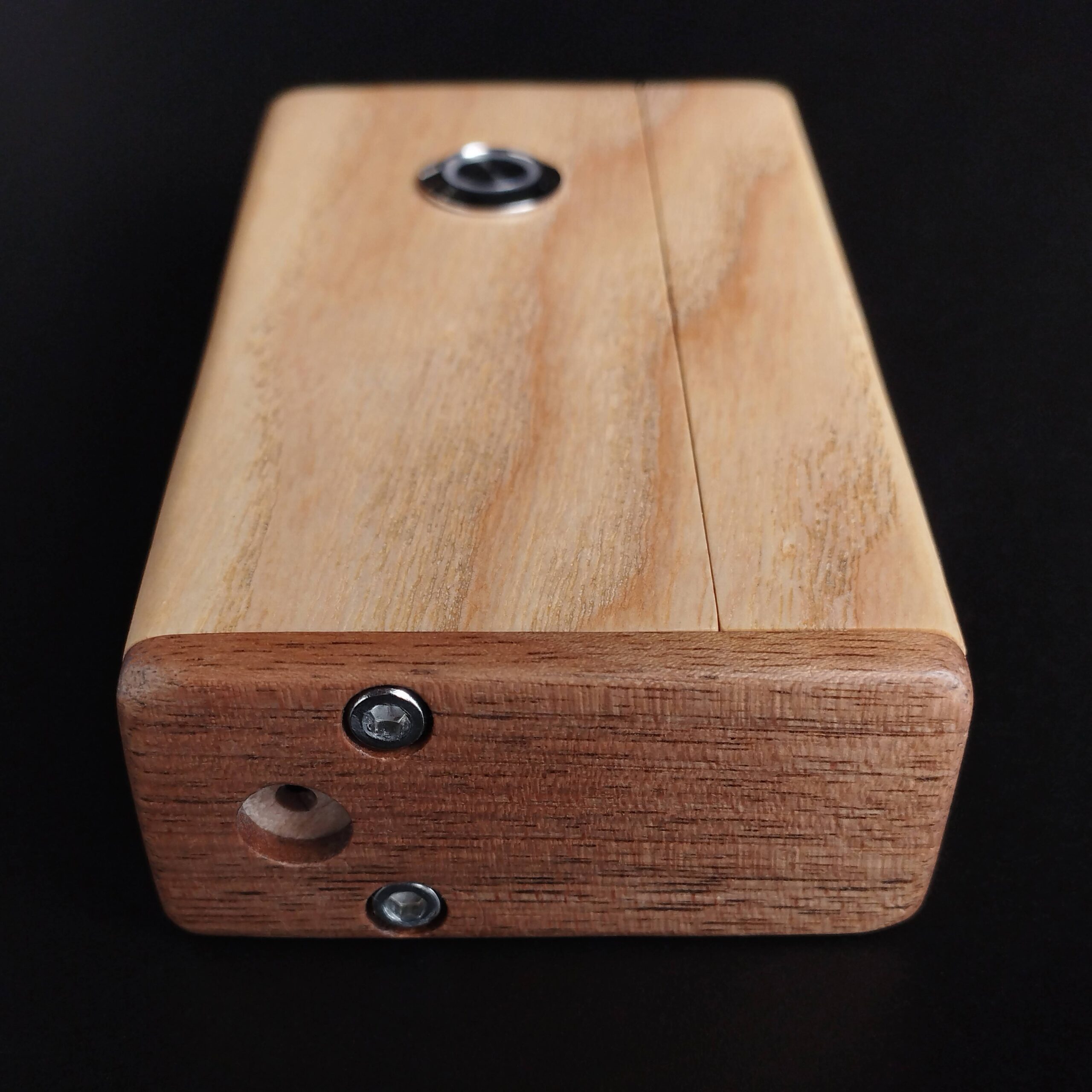
Another high-contrast combination that works pretty well: Ash with Walnut plate.
The six classics can be divided into 3 light woods (Maple, Ash and Beech) and 3 darker woods (Cherry, Sycamore and Walnut). In general mixing any of the light woods with any of the dark woods gives interesting results.
Sometimes a little tone-matching is required to make it look even better, but that is something I am the only one able to perform, as you need to have the pieces right under your eyes and I can quickly search my stock to find the best match.
On the other hand, trying to mix the 3 light woods or the 3 dark woods together (at least for the six classics) seems to rarely work, if ever. The light woods are too close in tone, yet when you put them next to each other your eye catches only the subtle differences and it feels off.
As for the dark woods it is even more complex as you are dealing with dissimilar red or orange undertones and unless you manage to hit the perfect tone-matching, it ends not so pretty usually.
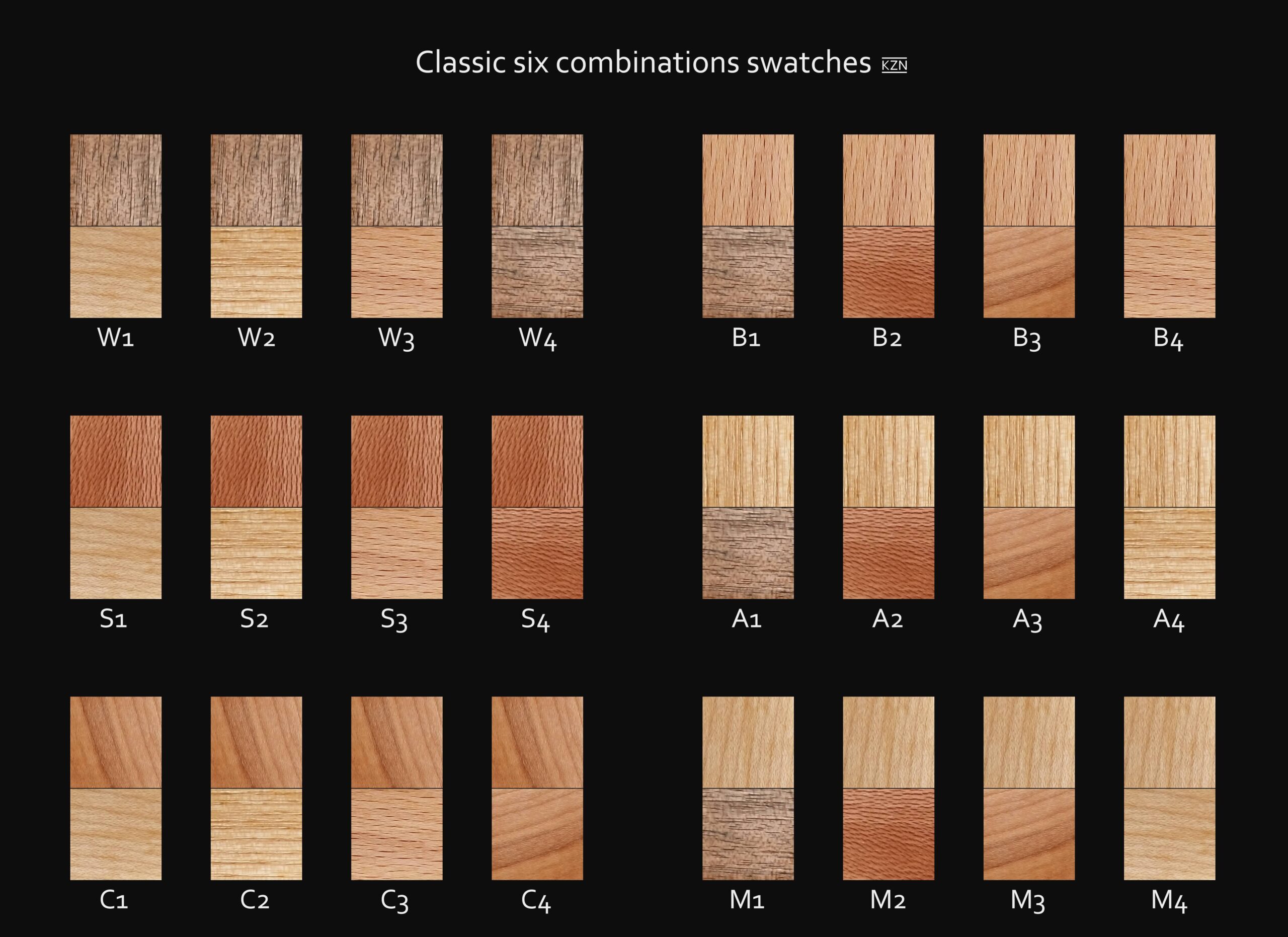
This is why I will not be offering these particular combinations. But it leaves us with 24 possibilities already. And I produced this little swatches infographic to make the decision process easier:
And if you don’t find a combination that you love, I have got literally dozens of more exotic species in stock, especially for the plates where there is the largest choice.